Lavori in Corso Meets Joe Saltarello and Heidi Miller-Saltarello of the Oregon Department of Corrections
 Antonietta Clemente
A conversation about work, relationships and correctional culture opens a new bridge between the Monti Dauni area and the United States.
Can a prison actually become safer when the people within it are more active, engaged and empowered to take responsibility?
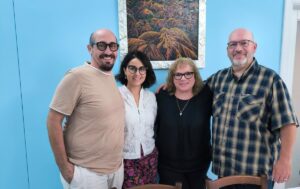
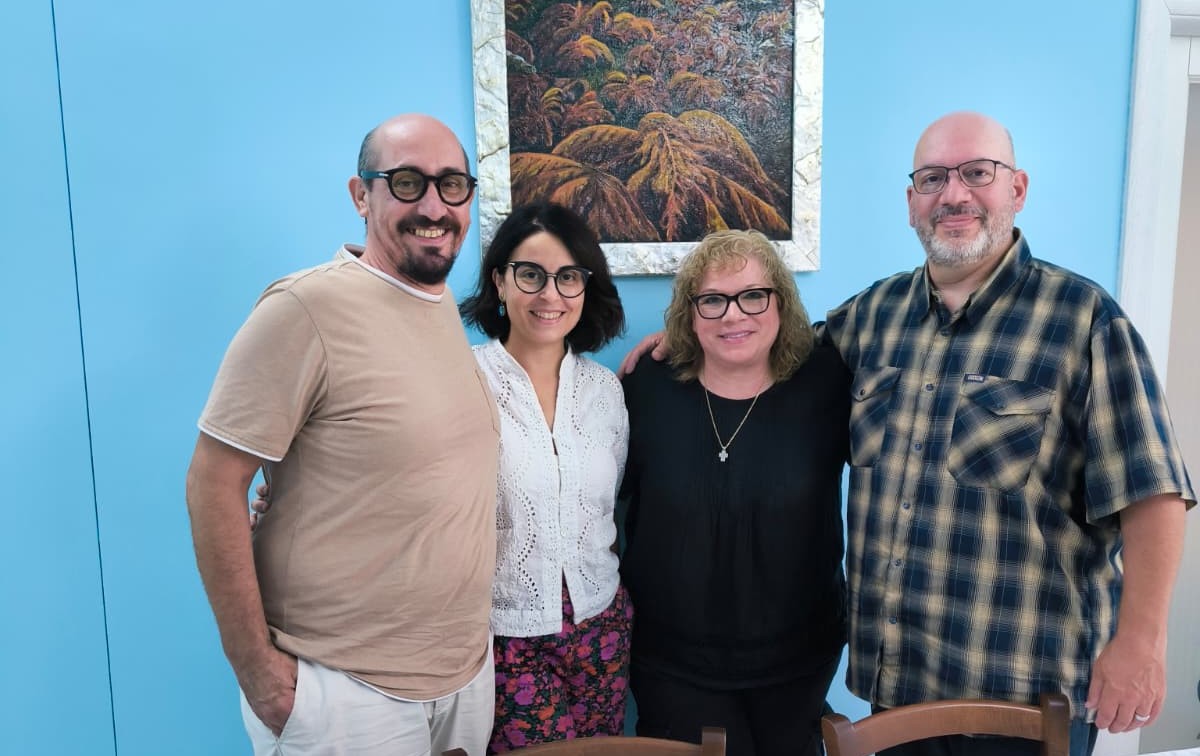
This is one of the questions we brought home from a meeting held in Biccari on August 5, 2026, between Lavori in Corso APS and Joe Saltarello and Heidi Miller-Saltarello, two professionals with the Oregon Department of Corrections who know the American correctional system from the inside and from different perspectives: organizational culture and the people who work within the system, and healthcare in correctional settings.
Representing Lavori in Corso were its President, Umberto Di Gioia, and Director, Antonietta Clemente.
The meeting was made possible by Father Leonardo Catalano, a long-standing supporter of the association’s mission who has patiently worked over the years to build connections between Biccari and the United States. Music has become one of the most effective languages of this growing network, including through the Biccari Music Festival. This time, that same network brought together experiences developed within two very different correctional systems.
From Oregon: A Correctional System in Motion
Joe and Heidi introduced us to The Oregon Way, the approach through which the Oregon Department of Corrections is working to transform correctional culture, drawing in part on exchanges with the Norwegian correctional system.
Relationships, accountability, training, staff well-being and dynamic security are all part of the same vision: humanization not as an alternative to security, but as one of the ways to build it.
Work provides a particularly tangible example.
In Oregon, the State Constitution provides for adults in custody to be engaged full-time, for 40 hours a week, in work, vocational training and educational activities. Part of this system operates through Oregon Corrections Enterprises and through public procurement mechanisms that give priority to certain goods and services produced through correctional work programs.
The outcome is not merely productive.
It reflects a different way of thinking about time spent serving a sentence: working, learning, developing skills, maintaining responsibility and preparing for a return to the community.
It is difficult to hear about this approach without thinking about Italy, where work opportunities still reach only a portion of the prison population and remain one of the major unfulfilled promises of the rehabilitative purpose of punishment.
When Experience Becomes Knowledge
For Lavori in Corso, this exchange comes at an important point in its journey.
For almost twenty years, the association has worked inside prisons and across the boundaries between prison and community, progressively focusing its work on parenting during incarceration, family relationships and children’s rights.
Years spent alongside children and families — and in dialogue with correctional staff, institutions, schools, social services and local communities — have generated a wealth of experience that LIC now aims to systematize, study and compare with practices beyond Italy.
“Our exchange with Oregon reminds us that prisons do not change through a single good practice,” Antonietta Clemente and Umberto Di Gioia observe. “Change happens when the perspective of the whole system changes: how we think about time spent serving a sentence, relationships, work and families. Learning about different experiences also helps us understand our own more deeply and transform what we have learned in the field into a method.”
This may be the most valuable outcome of our meeting in Biccari.
Joe and Heidi gave us the opportunity to look from the inside at a system very different from our own. Lavori in Corso brought another perspective to the table: one developed through almost twenty years of working with the consequences of incarceration beyond the individual serving the sentence — within relationships, families and the lives of children.
Our meeting with Joe and Heidi leaves us, above all, with one question:
How much of the time spent in prison are we truly turning into a future?
This is where Lavori in Corso intends to continue its work, bringing almost twenty years of experience into dialogue with some of the most interesting practices emerging beyond Italy.
Because a sentence has meaning when it prepares for what comes next — in work, in relationships, and in life.